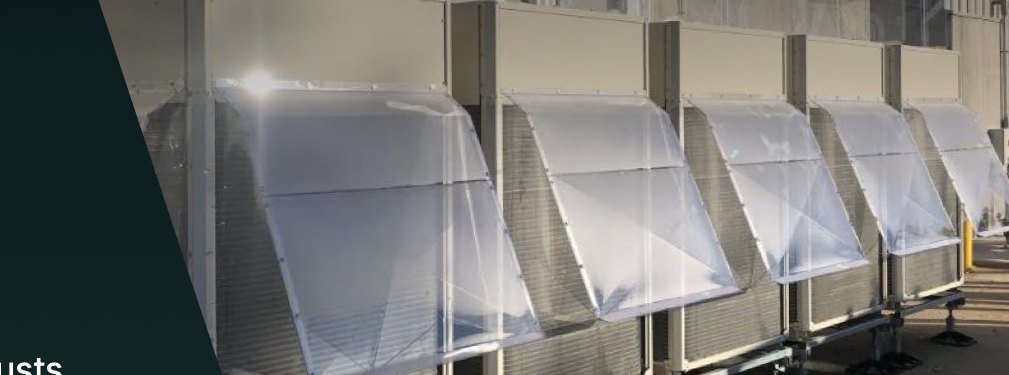
Variable capacity. Precise control.
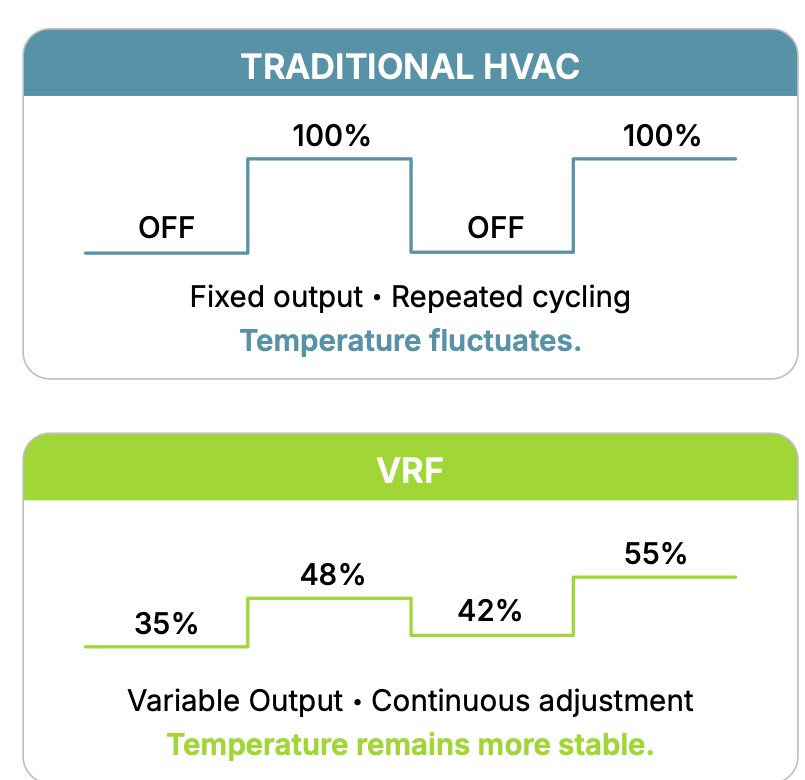
Variable Refrigerant Flow continuously adjusts heating and cooling output to the real‑time demands of the cultivation environment, without the constant on/off cycling of traditional HVAC.
HVAC that adjusts to the environment
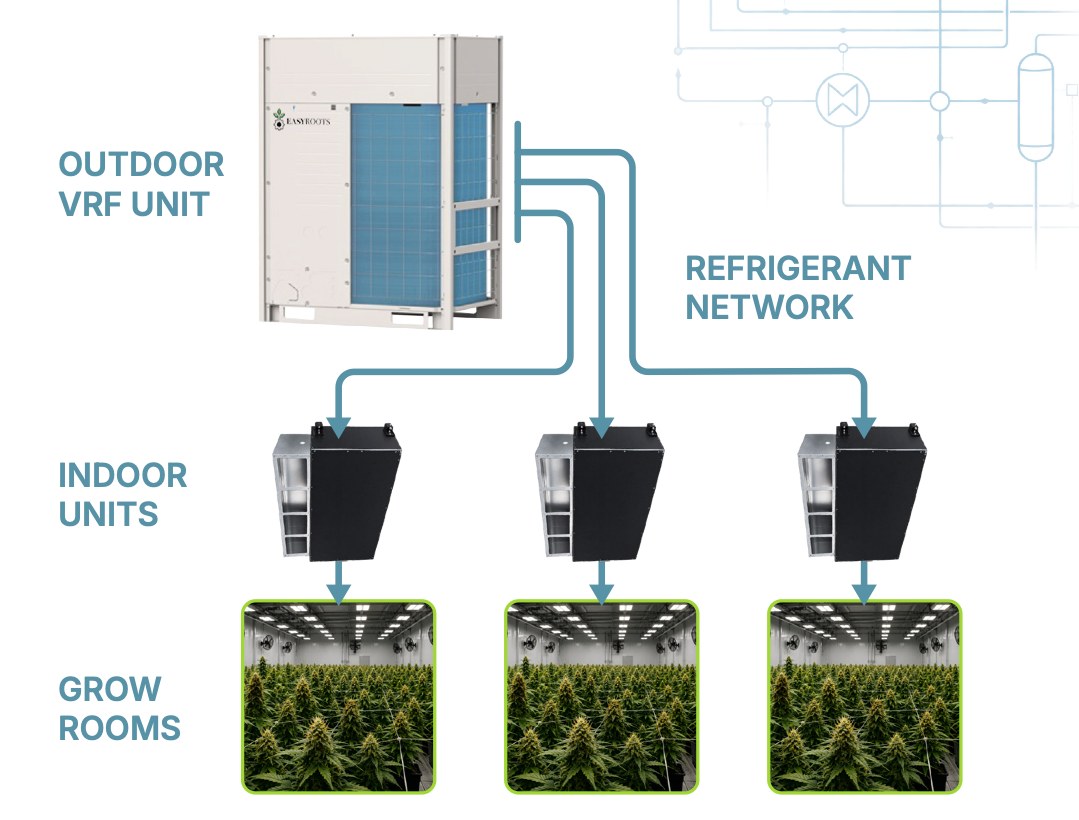
VRF uses inverter‑driven compressors to continuously adjust capacity based on demand, while ECM fans provide variable airflow. Together they deliver only the conditioning the facility needs at a given moment.
Why VRF for cultivation?
Precise control
Variable capacity responds as cultivation loads change.
Lower power demand
High‑efficiency operation helps reduce electrical requirements.
Ductless design
Compact indoor units preserve valuable cultivation space.
Zone control
Individual zones can be monitored, scheduled, and controlled independently.
Cultivation environments are dynamic
VRF adjusts as conditions change. Four things move the load in a commercial grow:
Lighting load
Heat load changes with lighting schedules.
Plant load
Crop growth changes environmental demand.
Room activity
Doors, people, and operations affect conditions.
Outdoor conditions
Weather changes heating and cooling needs.
Three VRF myths, answered
"VRF can't handle cultivation environments."
Reality: successful performance depends on proper engineering, sizing, controls, installation, and environmental‑system design. We have deployed VRF in cultivation environments since 2016.
"VRF is just a mini‑split."
Reality: VRF is commercial multi‑zone technology, engineered for substantially different system demands and continuous operation.
"VRF is only designed for comfort cooling."
Reality: VRF uses inverter‑driven compressors to continuously adjust output as loads change, not simply cycle equipment on and off.
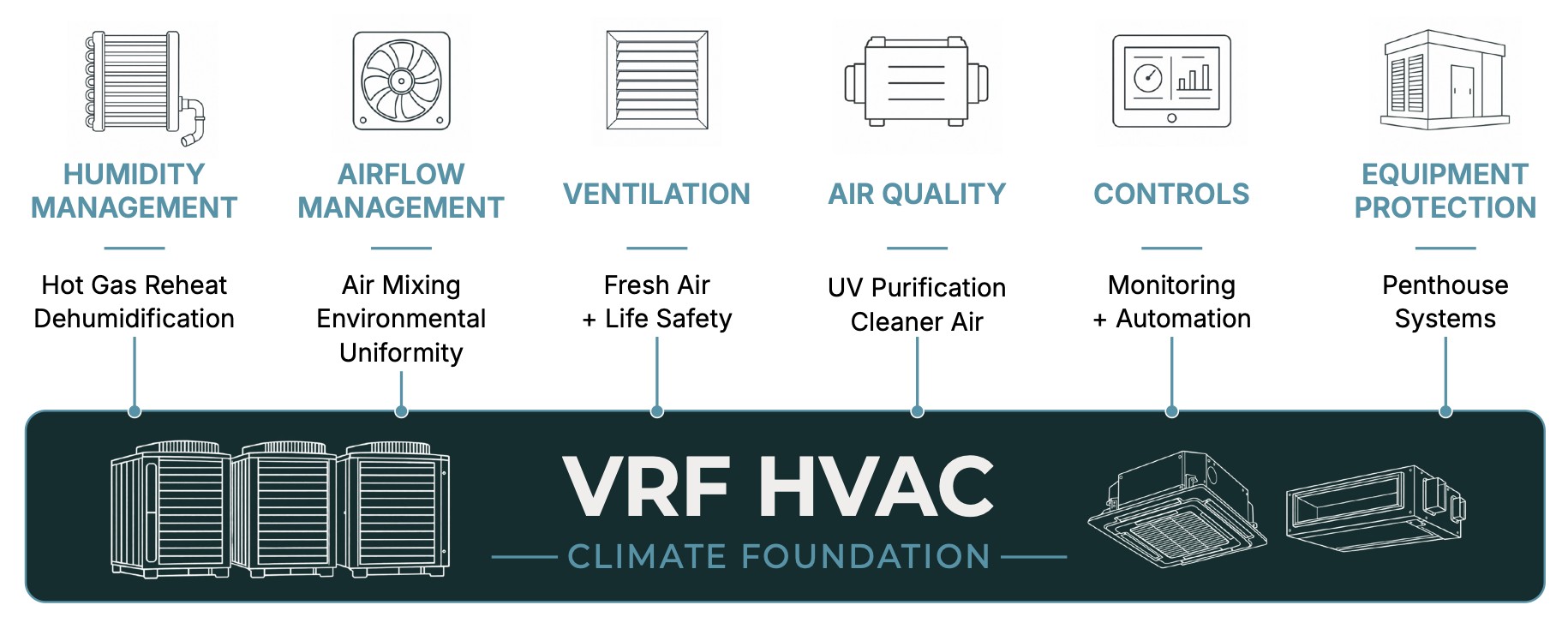
VRF is the foundation. We engineer the complete environment.
VRF technology is only as effective as the system built around it.
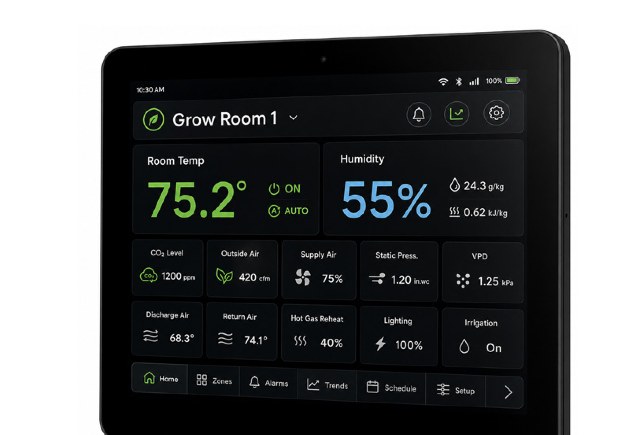
Intelligent control, down to the zone
Monitor conditions in real time, adjust settings with precision, automate equipment and setpoints, and get alarms when a room drifts. Zone‑level visibility is how operators respond to changing environmental demand before it costs them a crop.
The equipment is not the system.
Easy Roots combines cultivation‑specific engineering, equipment selection, humidity management, airflow, ventilation, controls, and commissioning into one coordinated climate strategy.
That is the difference between buying VRF equipment and getting an engineered environment that holds spec through every stage of the crop.